Friday, June 19, 2015

Boardroom Body Language


Here’s some empathy today for all the board chairs and CEOs who pray and prepare for effective board meetings—and sometimes drive home discouraged. Board members tell me they experience some or all of the following irritants in most meetings:


Unintentional Lack of Eye Contact. Sometimes, the room layout prevents eye contact with every board member—which impedes effective communication. (Long, narrow conference tables rarely facilitate robust conversations. Unless the table is named after a major donor, this has an easy fix—change rooms or change tables.)

Intentional Lack of Eye Contact. I say “intentional” because when a board member prioritizes his or her iPhone over his or her colleagues, it divides the room into two groups: 1) “We need a no device rule!” or 2) “Welcome to the 21st Century, Henrietta! Get over it!”

Folded Arms and Closed Heart. The oft-quoted research says that 93 percent of our communication is non-verbal. So when your favorite curmudgeon (the one that’s occupied the same chair location for 27 years) crosses his arms, whispers his patented “Harrumph!” and tunes out of the discussion—his non-verbal “no vote” poisons the discussion even before the vote is called for.

The answer to these under-the-table conflicts? Talk about it. 

You don’t need a committee. You don’t need to publish the 10 Commandments of Boardroom Protocol, but you can agree on the preferred culture you’d appreciate in your meetings. When you’re recruiting new board members (similar to recruiting staff), you’ll want to know—up front—if the candidate is in alignment with your culture. To do that, your culture needs to be crystal clear.

Usually, you don’t need to elevate irritants to the Matthew 18 level—but the standard is still a good one. Peacemaker® Ministries, an ECFA-accredited member, has a helpful “4 G” approach to conflict resolution. The first is “Glorify God.”  The second “G” is “Get the log out of your own eye.”

They add: “One of the most challenging principles of peacemaking is set forth in Matthew 7:5, where Jesus says, ‘You hypocrite, first take the plank out of your own eye, and then you will see clearly to remove the speck from your brother’s eye.’

“There are generally two kinds of ‘logs’ you need to look for when dealing with conflict. First, you need to ask whether you have had a critical, negative, or overly sensitive attitude that has led to unnecessary conflict. One of the best ways to do this is to spend some time meditating on Philippians 4:2-9, which describes the kind of attitude Christians should have even when they are involved in a conflict.”

Suggestion: Visit Peacemaker® Ministries for all four “G’s” and share these at your next board meeting. May God bless your work, your words and your non-verbal body language!

QUESTION: When is the last time you’ve talked about boardroom protocol and culture with your board?

Thursday, June 11, 2015

Fist Fights Over Mission Statements!


Recently a CEO asked me to resolve a verbal fist fight over the ministry’s mission statement. In their strategic planning process, some members of the management team voiced a strong difference of opinions. I assured this in-the-trenches leader that this was a good thing! 

Patrick Lencioni has noted that the reason most meetings (including board meetings, I’ll add) are so boring is because there is not enough conflict. For more on this, read his chapter, “The Centrality of Great Meetings” in The Advantage: Why Organizational Health Trumps Everything Else in Business. Lencioni calls bad meetings “the birthplace of unhealthy organizations.”

But back to the question about mission statements. I encouraged this CEO to evaluate the oomph and the caliber of the mission statement several ways:

• At least annually, when the board assesses organizational effectiveness and ministry results, does the mission statement give guidance for evaluating the organization’s trajectory? What ministry results should be measured? If the mission statement is too lofty, it serves no one. (However, vision statements—what an organization strives to be—are often lofty.) Ultimately, the board, not the management team, must land on a mission statement.

• As Tami Heim, president and CEO of Christian Leadership Alliance asked recently—does the mission engage you emotionally? She writes:

“In a 2013 interview I conducted with Wess Stafford, former CEO of Compassion International, we talked about Compassion’s mission. Wess explained,
‘When you share your mission and it doesn’t move you to tears in the first 90 seconds, you need to get out of the way. You need to resign. Yes resign, so the organization can find a leader who has a passion worthy of the call.’”


First, of course, you need a board-affirmed mission statement that grabs you by the throat. When sorted out through a robust spiritual discernment process, the mission statements of Christ-centered organizations often ooze with a sense of the Holy!

Bottom line: we waste a lot of staff time and board time on meaningless strategic planning busy work. But—reshaping the mission statement, if needed, is a high priority endeavor. If you don’t get it right, you’ll never have high commitment on anything else. 

QUESTION: Does your ministry’s mission statement guide the core decisions of your board? Do all board members know the mission statement by memory?

Friday, May 29, 2015

Sorry! There Is No ONE Thing!

Warning! Beware of board members, CEOs, consultants, self-proclaimed governance experts (or any warm body clutching Robert’s Rules of Order) who would pontificate, “There is just ONE key to effective governance.”

Sorry. There is no ONE thing. 

• 3 Hats. There are at least three important hats every board member wears—not one. More info at: ECFA Governance Toolbox Series No. 2: Balancing Board Roles: Understanding the 3 Hats: Governance, Volunteer, Participant.

• 5 Questions. Peter Drucker says there are at least five questions that boards must address, including: “Who is our customer?” and “What does our customer value?” Read: The Five Most Important Questions You Will Ever Ask About Your Organization.

• 10 Responsibilities. BoardSource reminds us that there are 10 responsibilities of nonprofit boards, including the need to assess, monitor and strengthen programs and services.  Read: Ten Basic Responsibilities of Nonprofit Boards.

• 12 Best Practices. Former foundation executive Dave Coleman preaches that boards must focus on 12 key areas, not just one. His fifth essential: “Boards have an effective CEO/Board Chair partnership.” Read: Board Essentials—12 Best Practices of Nonprofit Boards. Plus! The helpful Christ-centered book, Best Practices for Effective Boards (Fairbanks, Gunter, and Cauchenour) also has 12 best practices, including: “Board members are outstanding examples of giving regularly and sacrificially to the church, college, or organization they serve.”

• 14 Board Questions. Prolific governance author and guru, Ram Charan, eloquently convinced me that there are 14 critical questions for boards, including my favorite, “Does our board really own the [organization’s] strategy?” Read: Owning Up: The 14 Questions Every Board Member Needs to Ask.

• 20 Buckets. While I see management positioned on a carefully balanced three-legged stool of Cause, Community, and Corporation—I believe a staff/board team must master 20 critical competencies. The “Board Bucket” is just one, but a critical one. Read: Mastering the Management Buckets: 20 Critical Competencies for Leading Your Business or Nonprofit

• 33 Principles. Really…there are more? Just this year, Independent Sector announced their list of 33 principles. The short version is available free as a two-page PDF.  The 86-page reference edition, Principles for Good Governance and Ethical Practice: A Guide for Charities and Foundations, is sold online. More info here.

• 85 Answers.  (We’re almost done!) BoardSource’s third edition of their board answer book now includes 85 questions and short answers. (The first edition was co-authored by Ted Engstrom and Bob Andringa.) This helpful guide has seven major categories, 85 topics, and 363 pages. If you’re looking for one of the big ideas in board service, Question 9 is a good place to start: “How does the board avoid the extremes of ‘rubber stamping’ and micromanaging?” Read: The Nonprofit Board Answer Book: A Practical Guide for Board Members and Chief Executives.

My recommendation: the Bible has the first and the final say on the keys to effective governance. One Great Commission (the mission), nine fruits of the spirit (core values), 10 commandments (character), 66 books—and a lifetime of learning how to walk in wisdom. Psalm 119:105 (NIV): “Your word is a lamp for my feet, a light on my path.” 

QUESTION: As a board, how should we discern the key essentials of effective Christ-centered governance? What’s the risk if we don’t have this discussion?

Friday, May 22, 2015

How Long (or Short) Should a Board Meeting Be?


When CEOs gather, a common question pops up from both rookie and experienced executives: “How long should our board meeting be?”


One size doesn’t fit all, of course. I usually answer with this Q & A directed to the 16th president of the United States: "Mr. Lincoln, how long do you think a man’s legs should be?" Lincoln responded: "Long enough to reach the ground."

Ditto board meeting length: long enough to accomplish your goals.

Some boards meet monthly over lunch. Others meet quarterly for a half-day. Another common pattern: two 24-hour meetings per year, plus two conference calls per year. One board I served met from Monday 2 p.m. to Tuesday 2 p.m., so board members could fly in on Monday morning and fly home on Tuesday afternoon—just one night away from home.

Local or regional organizations have different needs than national or international ministries. I have my druthers on meeting frequency and length and I tilt more toward the underlying values described in Jeffrey Sonnenfeld’s Harvard Business Review masterpiece, “What Makes Great Boards Great.”  

After studying board performance and CEO leadership for 25 years, Sonnenfeld’s conclusion is startling. “It’s not rules and regulations [or meeting length?]. It’s the way people work together,” says the author.

Sonnenfeld studied the common wisdom on effective governance (board size, age of board members, independence, active committees, etc.)—and discovering that these “pillars” made little difference in effectiveness, the author asked, “So if following good-governance regulatory recipes doesn’t produce good boards, what does?”

“The key isn’t structural, it’s social.”

Read the article (it’s convicting) and I’m guessing you’ll wonder if your entire board governance package is time-appropriate.  Some questions:
   • Has your board invested adequate time on the “social” side of building and enhancing relationships so, as Sonnenfeld suggests, your board practices a “virtuous cycle of respect, trust and candor?”
   • Are board meetings rushed—with no time for prayer, except the perfunctory opening and closing tip of the hat to Almighty God?
   • Are big issues (including possible conflicts of interest) identified on the agenda with appropriate time to hear from God and all board members?
   • Is there a spiritual discernment process in place for inviting new board members to join this holy circle?
   • Is serious time allocated for the CEO’s annual performance review?
   • Is thoughtful agenda time budgeted for the board’s annual self-assessment process?

Again, one size doesn’t fit all. Short meetings often short-circuit effective governance. Long board meetings may be long for all the wrong reasons. 

Noting “phone-book-size board reports,” Sonnenfeld asks, “What kind of CEO waits until the night before the board meeting to dump on the directors a phone-book-size report, that includes buried in a thicket of subclauses and footnotes, the news that earnings are off for the second consecutive quarter? Surely not a CEO who trusts his or her board. Yet this destructive, dangerous pattern happens all the time.”

Like I said: convicting. 

At your next meeting begin with Psalm 90:12, “Teach us to number our days, that we may gain a heart of wisdom.” (NIV)

QUESTION: Is it time to focus on governance objectives and outcomes—and then discern perhaps a new pattern for the frequency and length of your board meetings?

Tuesday, May 12, 2015

A Board Prayer: The Least Words, The Least Intensity, The Least Volume!


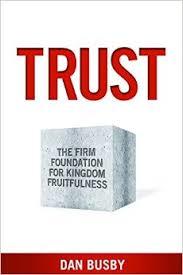
After you reflect on the eight foundations of trust (Truth-Telling, Center Stage, Perceptions, The Tone of Trust, Rules, Serving, Courage, and Perseverance) in Dan Busby’s new book, Trust: The Firm Foundation for Kingdom Fruitfulness, a powerful prayer awaits you on pages 86-89.


Here’s a taste:

“Dear God...Help me to SPEAK CAUTIOUSLY.
   • Let me use the least words, the least intensity, the least volume needed to be understood.
   • Help me voice my opinions with care, strength and meekness.
   • Help me to ask good questions, open dialogue, explore options, and deepen discussion.
   • Help me to say nothing degrading and nothing that would draw lines of conflict unnecessarily.
   • Help me to affirm and agree whenever possible.
   • Help me to give second voice to a courageous and wise first-voice; those who risk presenting a new, contrary or unrefined perspective.
   • Lord, help me to accept compliments and approval with humility.
   • God, give me the grace to watch with dignity as my proposal fails, and give me humility when my idea meets with approval.”

The Lord inspired Dan Bolin, International Director of Christian Camping International, to write this humbling prayer while serving board members during an overseas trip. Last week, a rescue mission CEO mentioned to me that after sharing the prayer at a board meeting, it’s now a regular agenda item as board members prepare their hearts for God’s business by reading the prayer together.

The entire prayer is also included as a supplementary resource in the ECFA Governance Toolbox Series No. 3: Conflicts of Interest

The prayer concludes, “Grant us the joy of arriving at adjournment closer to one another because we are closer to you.”

QUESTION: When the gavel sounds, are your board members closer to God and to each other?

Thursday, April 23, 2015

Chopsticks and Fulcrums: The Board Chair/CEO Relationship


“The board chair-CEO relationship is like a pair of chopsticks,” writes Michael Naufal. “One is much more effective with the support of the other.”


Mary Hiland writing in the Journal for Nonprofit Management says that “board chairs and executive directors comprise the key leadership fulcrum of nonprofit organizations.”

So…here’s today’s $64,000 question: “How much time have these two key people in your ministry invested in enriching this critical relationship?” Have you read a book or article together, attended a governance workshop together, or consulted with other board chair/CEO dynamic duos?

My friend and mentor, George Duff, served 27 years as the president of the Greater Seattle Chamber of Commerce. He adjusted to a different board chair every year: 27 in all! His wisdom saved me!  I noticed, for example, that one year my analytical board chair would circle all the typos in the board reports. The next year, my expressive board chair would show up unprepared (no advance reading). I quickly became a student of the four social styles and learned how to leverage the ample gifts and strengths of all my board chairs (each uniquely gifted by God).

One time I observed a boardroom discussion between the CEO and his board when the CEO reported that every time the members elected a new board chair—the CEO’s time crunch worsened. He estimated it required at least 10 percent of his time each year to brief a new board chair—and learn the new chair’s leadership style.

The point today: if ministry effectiveness really does hang on a healthy relationship between the board chair and the CEO (however you label it: chopsticks or fulcrums)—it demands a serious investment of time, prayer and focus. Resources are ample at ECFA, BoardSource, Amazon and Google. (Or check out my Board Bucket page.) Plus, read Rebekah Basinger's blog, Generous Matters. She pointed out the chopsticks and fulcrums references for me.

David McKenna has a Kingdom description for this important partnership. “The board-CEO relationship is the soul of the Christ-centered organization. It connects leaders to followers, communicates vision and mission to the body, and sets the tone for the organization.” (Read more in the ECFAPress book, Stewards of a Sacred Trust: CEO Selection, Transition and Development for Boards of Christ-centered Organizations, by David L. McKenna. By the way, McKenna was the first blogger for this column from January to May 2011 and his blogs are packed with insights.)

QUESTION: How much time are your board chair and CEO investing in supporting each other’s unique but complementary roles—and communicating those roles to the board and the staff?

Monday, April 13, 2015

There’s an Elephant in the Room—But Let’s Just Keep the Peace!


“There’s an Elephant in the Room—But Let’s Just Keep the Peace!” is the title of the “In-the-Trenches Board Interviews” segment in the new resource:


ECFA Governance Toolbox Series No. 3:
CONFLICTS OF INTEREST

Addressing Board and Organizational Conflicts of Interest—Avoiding Trouble, Trouble, Trouble With Related–Party Transactions.

(Click here for more information.)

This 16-minute informative and entertaining DVD and the Board Member Read-and-Engage Viewing Guide addresses three critical questions about conflicts of interest and related-party transactions. The 20-page viewing guide (12 per toolbox) includes a board self-assessment tool for each question—a perfect resource for your next board meeting.

The DVD highlights how four board members address conflicts of interest and related-party transactions:

SPIKE, BOARD CHAIR
“Any surprises today? Not really. Well…not a surprise since Patricia’s pesky question was somewhat predictable. (That’s Patricia for you!) I mean…she absolutely messed up the really sweet spirit of our meeting by asking about the Brown Company contract. That wasn’t cool. No one knows that I’m an investor in that company—so I really couldn’t say anything.”

PATRICIA, BOARD MEMBER
“Well…we finally, finally had an executive session (without any staff members in the room). It was long overdue for someone to ask about the Brown Company contract. I mean…Joe Brown’s wife is on the board—and they ARE generous—but it appears we have never received competitive bids. I had to have a hallway conversation with the CFO—just to get to the bottom of this.”

JAMEEL, BOARD MEMBER
“I’d say one of our board’s best practices is keeping the peace. We are very mature about this. The Lord doesn’t want us to major on the minors. After all, boards can’t obsess on dotting every ‘i’ and crossing every ‘t.’ That just annoys board members and often causes hurt feelings. Policies should never trump relationships. That’s just not biblical!”

EMELIA, NEW BOARD MEMBER
“Well…it’s my understanding that all board members must sign a ‘Conflicts of Interest’ statement every January. I’ve never signed it! Do I have any conflicts of interest? I don’t think so…but…how would you define a ‘Conflict of Interest?’”

Too often in the boardroom, conflicts of interest are either not addressed or relegated to the back burner due to more pressing concerns. Neither approach will enhance your ministry’s reputation. That’s why ECFA urges you to view this video at your next board meeting—and elevate this subject in order to elevate trust and integrity with your givers and the public. (Click here for more information.)

Is it worth the investment of time? John Wesley said,
“I judge all things only by the price 
they shall gain in eternity.”


QUESTION: When is the last time you’ve had an open and transparent discussion about board and staff conflicts of interest—and the perception of conflicts of interest?